
India's crude oil production rose by 3.2 per cent in May on back of better performance by state- owned oil major Oil and Natural Gas Corp (ONGC), while refinery output remained unchanged.

Winner will construct 300,000 barrels per day refinery.
Petroleum Secretary M S Srinivasan observed that smaller and more nimble companies are proving formidable and ONGC would have to register exploration successes and strengthen its systems to retain its position in the industry.

Billionaire Mukesh Ambani's children -- Isha, Akash and Anant -- on Monday were appointed on the board of his energy-to-technology conglomerate Reliance Industries Ltd, in what is seen as a clear path of succession planning at India's most valuable company.

Shares of Reliance Industries (RIL) traded 2 per cent higher at Rs 2,310.10 on the BSE in intra-day trade in an otherwise volatile market after the company reported a 27.4 per cent year-on-year (YoY) growth in its consolidated net profit at Rs 17,394 crore for the September quarter (Q2FY24). While revenue growth of the company was flattish YoY at Rs 2.32 trillion, the profit rose on the back of operational improvement across most segments, especially higher profits in the O2C (oil-to-chemicals) and oil & gas businesses, as well as the retail business. "Strong operational and financial contribution from all business segments has helped Reliance deliver another quarter of robust growth," said Mukesh Ambani, chairman and managing director of the company.

Billionaire Mukesh Ambani's Reliance Industries on Friday reported a 43 per cent jump in its September quarter net profit as its businesses from oil to retail fired on all cylinders, growing both sequentially and on a year-on-year basis. Net profit of Rs 13,680 crore, or Rs 20.88 per share, in July-September compared with Rs 9,567 crore, or Rs 14.84 a share, in the same period a year back, the company said in a statement. While better realisation and a sharp rise in crude oil prices benefited the old-economy business, retail saw footfalls at stores reach pre-Covid levels and per user earning from telecom business rose.
A plunge in fuel demand after the raging pandemic forced people to stay home and stifled the economy dealt a body blow to the firm's traditional cash cow oil refining and petrochemicals, even as consumer-facing businesses, which account for 35 per cent of the oil-to-telecom-to-retail conglomerate's revenues, continued to do well.

Minister of state for petroleum and natural gas Jitin Prasada in a written reply to a question in the Lok Sabha said that IOC and MRPL have been allocated 0.20 million tonnes each in 2009-10, while HPCL would offtake 0.30 million tonnes of Rajasthan crude. In 2010-11, IOC would buy 1.5 million tonnes of the crude oil from the nation's most prolific oil discovery in more than two decades, while MRPL would double its offtake to 0.40 million tonnes.
Afraid of US sanctions, State Bank declines payment facilitation for oil imports from Iran.
India's oil and gas industry is estimated to be a US$ 110 billion and it is one of the largest contributors to the central and state exchequers.

'They were planning collection of arms dropped by drones and supply to active terrorists of Jaish-e-Mohammed in Kashmir valley; planting a vehicle-based IED in Jammu before 15th August and reconnaissance of important targets in other parts of the country'

'It will be important strategically and geographically because there is no port in India which is as close to the international shipping route as Vizhinjam.'

Capital expenditure by 54 large central public sector enterprises and five departmental arms, having a capex minimum target of Rs 100 crore, rose 93 per cent year-on-year (YoY) in the April-May period to Rs 1.39 trillion. The National Highways Authority of India (NHAI) and the Railways have started this financial year's capex cycle on a stronger note. In the first two months of FY24, the 54 CPSEs, along with the departmental arms, achieved 19 per cent of their combined budget target of Rs 7.33 trillion, Business Standard has learnt.

Oil prices have declined by more than 60 per cent since January with benchmark crude falling well below $30 per barrel, driven by an acute oil demand decline caused by the coronavirus and a lack of production cuts by OPEC and other oil producing countries.
The Multi Commodity Exchange on Wednesday launched India's first ever crude oil futures contract.
The derivative contracts in the underlying Essar Oil, IFCI, Rajesh Exports, Adlabs Film, Arvind Mills, Nagarjuna Fertilisers and Bongaigoan Refinery are currently in the ban period, a NSE circular said on Wednesday.

Billionaire Mukesh Ambani's Reliance Industries has signed a pact to invest an undisclosed amount in a giant petrochemical hub being built in the UAE. The oil-to-telecom conglomerate will join the recently-formed Ta'ziz joint venture of Abu Dhabi state energy giant Adnoc and state holding company ADQ for developing the Ruwais Derivatives Park in western Abu Dhabi. A company statement said an agreement has been signed for Reliance to invest in the project but did not give details. Unconfirmed reports put the investment at about $1.5 billion.

Growth of eight key infrastructure sectors slowed down to 8.2 per cent in June 2023 compared to the year-ago month due to a decline in the production of crude oil, according to the official data released on Monday.

A total of 1,016 candidates -- 664 men and 352 women -- have qualified in the examination and have been recommended by the Union Public Service Commission for appointment to various services.
The output of eight core sectors grew by 11.6 per cent in August, mainly due to an uptick in the production of cement, coal, and natural gas, official data showed on Thursday. The eight infrastructure sectors of coal, crude oil, natural gas, refinery products, fertilisers, steel, cement and electricity had contracted by 6.9 per cent in August 2020 due to the nationwide lockdown imposed to control the spread of COVID-19. The eight core industries comprise 40.27 per cent of the weight of items included in the Index of Industrial Production (IIP).
"We will be guided by our national interest," he said.

The move comes days after the Indian Navy also warned of a possible terror attack from the sea side.
Soaring output has left the world awash with cheap crude as supply exceeds demand by 1 million to 2 million barrels per day

Barring coal, electricity and steel, all sectors -- crude oil, natural gas, refinery products, fertiliser and cement -- recorded negative growth in September 2020.
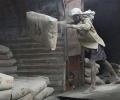
Barring crude oil and cement, all other sectors recorded positive growth in November. In October, these core sectors' output had grown by 8.4 per cent. In February this year, the growth rate contracted to 3.3 per cent.
'Indian and Iranian sources both confirmed to me that India and Iran are moving ahead to implement a payment system on buying oil from Iran and hope to finalise it very soon,' says Aveek Sen.
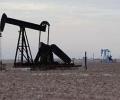
Petroleum minister M Veerappa Moily would like to import 11 million tonnes of Iranian crude in this financial year.
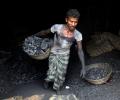
The production of eight infrastructure sectors rose by 7.5 per cent in October on healthy performance by the segments of coal, natural gas, refinery products and cement, official data released on Tuesday showed. The output of eight core sectors of coal, crude oil, natural gas, refinery products, fertilisers, steel, cement and electricity had contracted by 0.5 per cent in October 2020, according to the data released by the commerce and industry ministry. Core sectors' growth stood at 4.5 per cent in September this year.
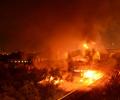
A fire broke out because of a suspected leakage in an oil pipeline passing through a land owned by the Mumbai Port Trust in Wadala in central Mumbai, but no one was injured.
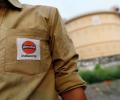
Indian Oil Corp (IOC) is deploying drones to monitor its vast network of pipelines across the country as it doubles down on the use of technology to thwart attempts to steal fuel, helping not just save the commodity but also avoid accidents. The country's top oil company already uses a combination of sophisticated technology and patrolling to detect any leakage from the pipeline network spanning over 15,000-kilometers. And now, it is adding drones to monitor the vast network, officials said. Use of technology helped throttle 34 attempts to pilfer fuel and arrest 53 persons in the 2020-21 fiscal year, they said adding the latest incident was in Sonipat, Haryana on August 17.
Saudi Arabia, which has the world's largest oil reserves, has said that it may increase its stock by around 200 billion barrels and was also mulling investment in building refineries in India among other countries.

After Reliance Industries Ltd and its partner bp plc of the UK, Nayara Energy - the nation's largest private fuel retailer - has started selling petrol and diesel at Re 1 less than the fuel sold by state-owned retailers, officials said. While state-owned Indian Oil Corporation (IOC), Bharat Petroleum Corporation Ltd (BPCL) and Hindustan Petroleum Corporation Ltd (HPCL) continue to hold prices despite a drop in international rates, private fuel retailers have started passing on the benefit to consumers. "To further stimulate domestic consumption and cater to local customers better, we have introduced a Re 1 discount in our retail outlets until the end of June 2023," a spokesperson for Nayara Energy said.

India has asked refiners that owe about $6.5 billion to Iran for oil imports to build up dollar and euro balances to avoid downward pressure on the rupee if six world powers and Tehran reach a final nuclear deal.
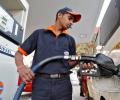
Global oil prices have slumped and India has access to larger amounts of discounted Russian crude oil, yet refiners are not passing on their savings to consumers

IOC has been forced to shut down its Digboi refinery in Assam and is operating Guwahati unit at minimal throughput, while OIL has been forced to shut LPG production and its crude oil production has dropped by 15-20%. Sources said the agitation has blocked the movement of tankers and trucks, which are mostly used to supply petrol, diesel and LPG from the refineries to different parts of the North East.
 © 2026 Rediff.com - Advertise with us - Disclaimer - Privacy Policy - Sitemap - Feedback - About us - Terms of use - Grievances